
The Founder's Strategic Playbook: Navigating Ambiguity with Design Thinking
Applying Design Thinking to Turn Uncertainty into a Competitive Advantage for Mission-Driven Startups
For the mission-driven startup founder, ambiguity is not an occasional challenge—it is the default operating environment. You are constantly piecing together the plane while flying it, balancing the need for rapid growth with the imperative to stay true to your mission. This relentless uncertainty can trigger a biological threat response in your team, leading to narrowed focus, reduced creativity, and a retreat into defensiveness.
This is where Design Thinking transcends a simple process and becomes a strategic leadership mindset. It offers a grounded, human-centered way to navigate the chaos of hyper-growth. As research from the Harvard Business Review highlights, understanding the biological and psychological impact of uncertainty is the first step to gaining real power to lead through it.
At Transformational Talent Solutions, we help founders adopt Design Thinking not just for product development, but as a framework for Human-Centered Scaling—a way to build a resilient culture that thrives on change.
Here are five strategic ways mission-driven founders can use Design Thinking to turn ambiguity into a strategic advantage.
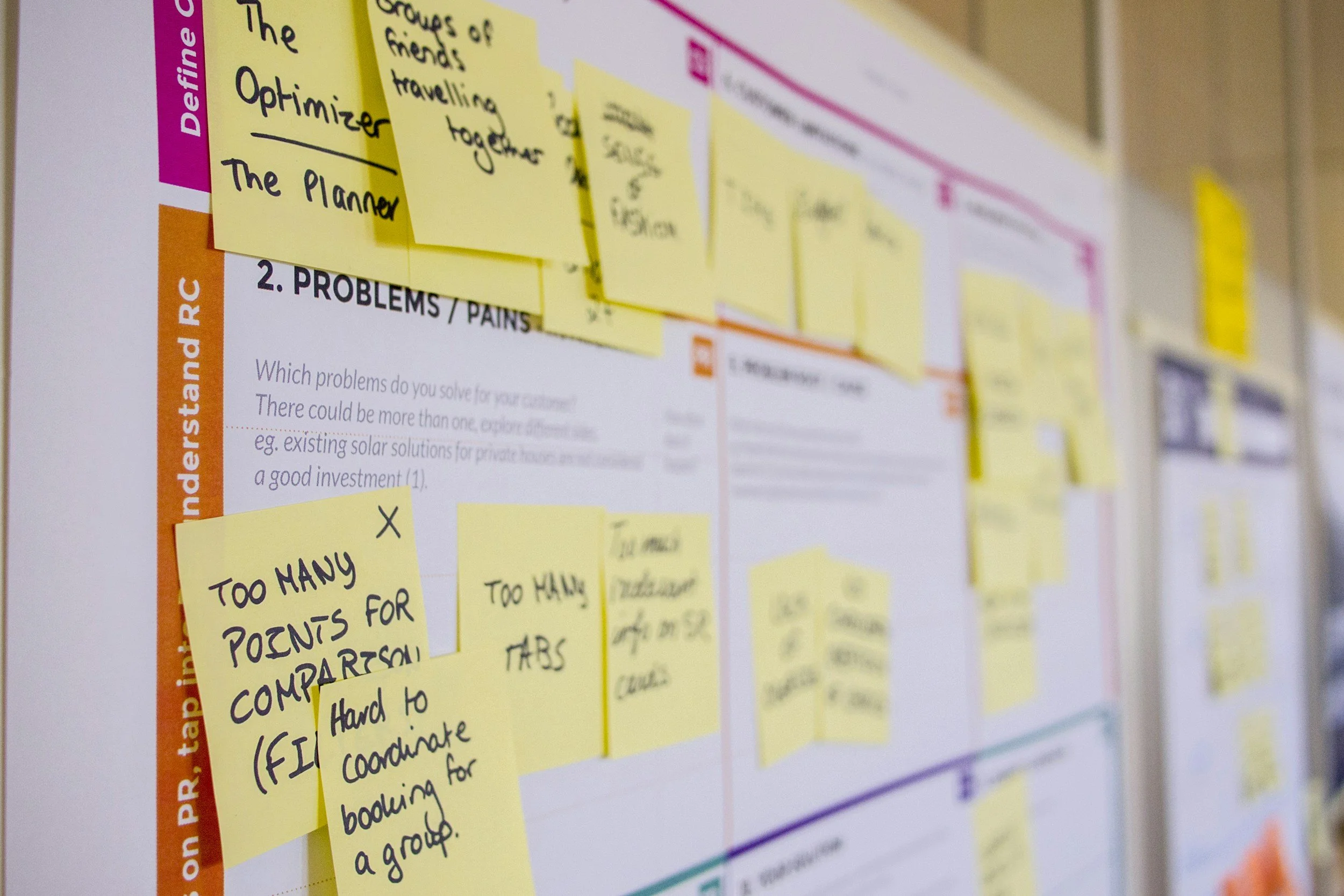
1. Reframe Problems to Interrupt the Stress Cycle
When ambiguity hits, the brain defaults to a threat response, pushing leaders toward urgency and paralysis. This is a critical risk for fast-growing startups.
Design Thinking provides the immediate antidote: reframing. By shifting a problem into an opportunity-oriented question—the classic “How might we…?” structure—you interrupt the stress cycle and re-engage the higher-order thinking necessary for innovation.
For the mission-driven founder, this practice is essential: it allows your team to design forward rather than retreat into a reactive, fear-based mode. It transforms a perceived threat into a manageable challenge, maintaining the momentum required for rapid growth.
2. Create Space for Inspiration: A Strategic Resource for Clarity
In the pressure cooker of a startup, the temptation is to force fast solutions. However, stress diminishes access to the prefrontal cortex, making expansive thinking difficult. Forcing ideation under pressure often leads to incremental, rather than transformational, solutions.
Designers strategically counter this by seeking inspiration before ideating. This means stepping into new contexts, gathering customer stories, and exploring analogous experiences.
Inspiration is not a delay; it is a strategic resource. It slows thinking, broadens perspective, and surfaces opportunities that metrics alone would miss.
Founder Advantage: For mission-driven companies, this technique ensures that your solutions are not just efficient, but deeply aligned with the emotional truths and needs of the people you serve, strengthening your product-market fit and mission integrity.
3. Experiment Your Way Forward: The Lean Startup with Psychological Safety
Big decisions can paralyze early-stage companies, triggering a freeze response that derails momentum. Design Thinking breaks this cycle through small, low-risk experiments designed to learn rather than prove.
This approach is the core of the Lean Startup model, but with a critical cultural component: psychological safety.
Action Creates Clarity: Experimentation reduces psychological threat, increases adaptability, and helps teams access creative problem-solving even when the path ahead is murky.
Scaling with Confidence: For founders, this transforms ambiguity into a series of manageable moves that generate data, build team confidence, and provide collective direction, ensuring you can scale your operations without fracturing your culture.
4. Build Rituals That Center Empathy for Talent Retention
During periods of high uncertainty, empathy is often the first leadership quality to disappear as leaders focus on efficiency and self-protection. Yet, research consistently shows that empathy-driven cultures improve engagement, top talent retention, and decision quality—all critical outcomes for scaling teams.
For the mission-driven founder, anchoring empathy in daily operations is a strategic advantage in the war for talent. Simple rituals like weekly listening sessions or dedicated customer story gathering help leaders avoid assumption-driven decisions and keep the organization aligned with the mission that makes your startup distinct. Empathy becomes the stabilizing force that retains your most valuable asset: your people.
5. Lead with Transparency to Build Resilient Teams
Uncertainty is amplified when employees don't know what leaders are thinking. Lack of communication under ambiguous conditions increases cognitive load, which slows performance and heightens anxiety.
A design-led practice that translates beautifully into leadership is sharing early prototypes of decisions.
•Reduce Overwhelm: Offering simple, visual explanations of what is known, what is unknown, and which experiments are underway reduces cognitive load and reinforces psychological safety.
•Autonomy and Trust: For founders, this builds resilient, self-directed teams who can operate with autonomy and trust, even during periods of rapid growth and change. This is essential for achieving Human-Centered Scaling.
Your Leadership Is the Highest-ROI Investment You Can Make
Ambiguity is the price of admission for a mission-driven startup founder. But when you adopt Design Thinking as a leadership mindset, you unlock a strategic advantage that is both deeply human and powerfully effective. Leaders who embrace empathy, inspiration, and experimentation are the ones who scale with clarity, equity, and care.
If you’re ready to explore how these principles can support your next phase of growth, Transformational Talent Solutions offers a complimentary consultation session. It’s a value-driven conversation designed to help you map one real challenge through the Design Thinking lens and leave with renewed confidence and direction for your Human-Centered Scaling journey.